Circumcision is one of the most commonly performed surgical procedures for conditions such as phimosis, recurrent infections, and certain hygiene-related concerns. In recent years, stapler circumcision has become a modern alternative to conventional techniques, offering several potential advantages for suitable patients.
Understanding the differences between these procedures can help patients discuss treatment options more confidently with their surgeon.
When Is Circumcision Recommended?
Circumcision may be advised for medical reasons such as:
- Phimosis (tight foreskin)
- Recurrent balanitis or infections
- Difficulty maintaining hygiene
- Pain during retraction
- Recurrent urinary infections in selected cases
The decision is based on clinical examination rather than personal preference alone.
What Is Stapler Circumcision?
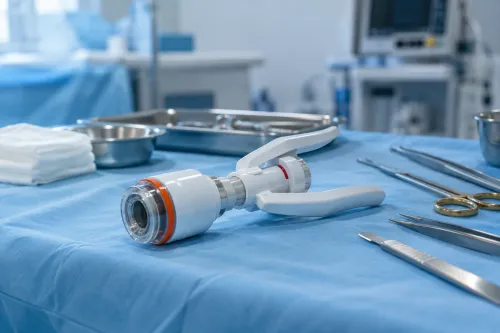
Stapler circumcision uses a specialised surgical device that removes the foreskin while placing a circular row of staples to support wound closure.
Compared with conventional methods, the procedure is designed to be quicker and more consistent in selected patients.
Potential Advantages
Many patients choose stapler circumcision because it may offer:
- Shorter operating time
- Reduced bleeding
- Smaller surgical wound
- Faster healing
- Better cosmetic appearance
- Earlier return to routine activities
The exact benefits vary depending on the patient's health and the complexity of the condition.
Is Everyone Suitable for Stapler Circumcision?
Not necessarily.
Certain anatomical variations or medical conditions may make conventional surgery more appropriate. A detailed consultation helps determine the safest and most effective technique.
Patients should avoid choosing a procedure based solely on advertisements or online comparisons.
Stapler Circumcision in Thane
Patients considering stapler circumcision in Thane should seek evaluation from an experienced surgeon who offers multiple treatment options instead of recommending one procedure for every case.
Dr Aditya Phadke assesses each patient individually, explaining the advantages, limitations, recovery expectations, and potential risks before recommending the most appropriate surgical technique.
Recovery Tips
Following surgery, patients are generally advised to:
- Keep the area clean and dry
- Wear comfortable clothing
- Avoid strenuous physical activity initially
- Take prescribed medications
- Attend scheduled follow-up visits
Most patients recover well when postoperative instructions are followed carefully. A personalised treatment plan and appropriate surgical technique contribute significantly to a smooth recovery.
Keywords