Before admission, you need more than a hospital address: bring identification, clinical reports, medication details, insurance or payment information, and an adult who can take you home. You will also need clear instructions about tests, fasting, medicines, anaesthesia and the operation planned, especially if severe symptoms make this an emergency rather than a routine appointment.
Key takeaways
- Seek emergency assessment for severe pain, repeated vomiting, fever or a rigid abdomen.
- Carry identification, medication details, test reports and your emergency contact.
- Tell the anaesthesia team about allergies, illnesses, medicines and your last food or drink.
- Follow the hospital’s fasting instructions and confirm whether surgery is laparoscopic or open.
When to go straight to emergency assessment and what to carry
Increasing right-lower-abdominal pain, repeated vomiting, fever, faintness, a rigid abdomen or inability to keep fluids down needs emergency assessment in Thane, not a routine surgeon appointment. Go to the nearest emergency department; do not drive yourself if you feel faint. Tell staff when you last ate or drank.
Urgent surgery must not be delayed simply to complete an elective fasting interval.
Pack this appendix surgery admission checklist:
- Aadhaar or another government photo ID for registration
- Referral letter, prior operation notes, prescriptions and medical reports
- Ultrasound or CT images on film or digital media, plus blood-test results
- A complete medicine list with doses, including blood thinners, and drug or food allergies
- Insurance card, policy details and any pre-authorisation papers
- Payment or deposit information requested by the hospital
- The accompanying adult’s name and mobile number
Fasting instructions come from the hospital and anaesthetist. Ask whether prescribed medicines can be taken with a small amount of water, and disclose any food or drink after the stated cut-off. Routine bowel cleansing is not normally an appendix operation requirement.
| Situation | What to do | What registration usually involves |
|---|---|---|
| Emergency symptoms | Attend emergency assessment immediately | ID, clinical details and available records; missing papers should not delay care |
| Planned admission after review | Follow the hospital’s appointment instructions | ID, referral, insurance authorisation and payment arrangements |
Carry comfortable clothing and avoid bringing valuables. Arrange a responsible adult for discharge if the hospital requires one.
Tests, medical history and disclosures before anaesthesia
The choice to operate and the anaesthesia plan depend on your examination, test results and disclosures—not a fixed panel. For appendix for surgery requirements thane, ask the treating hospital which tests are needed for your age, illnesses and urgency; unnecessary testing can delay treatment.
Tell the surgeon and anaesthetist about:
- Pregnancy or a possibility of pregnancy before imaging or anaesthesia
- Blood thinners, aspirin, diabetes medicines, steroids and every non-prescription drug
- Drug or food allergies, especially any previous reaction to antibiotics or anaesthetic agents
- Earlier anaesthetic difficulty, difficult intubation, severe nausea or malignant hyperthermia in your family
- Heart, lung, kidney, liver or bleeding disorders, sleep apnoea and previous operations
| Test or assessment | What it checks | What could change |
|---|---|---|
| Complete blood count | Anaemia and infection | Timing, fluids or treatment before surgery |
| Electrolytes, creatinine and glucose | Kidney function, salts and blood sugar | Drug doses, fluids and anaesthetic monitoring |
| Coagulation tests | Clotting status | Management of anticoagulants or bleeding risk |
| ECG or chest assessment | Heart and lung risk | Anaesthesia monitoring or specialist review |
| Urine or pregnancy test | Pregnancy and urinary causes | Imaging and anaesthesia choices |
Ultrasound can help; CT is more accurate in many adults. During pregnancy, ultrasound is usually first, followed by MRI without gadolinium when ultrasound is inconclusive and MRI is available. Preoperative antibiotics are commonly given before incision; perforation or an abscess can require longer treatment.
Fasting, medicines and practical preparation on admission day
Fasting instructions come from the hospital and anaesthetist, not a standard appendix surgery preparation Thane timetable. Follow the written cut-off for solid food, milk, clear fluids and chewing gum; ask whether essential prescribed medicines may be taken with a small sip of water.
If emergency admission followed a meal or drink, tell the staff instead of hiding it. Do not delay urgent treatment just to complete an elective fasting interval.
- Keep taking, stopping or adjusting medicines only as instructed. Give staff a complete list with doses, including insulin, diabetes tablets, blood thinners, steroids, painkillers and supplements. Bring the medicine strips or prescription so the team can verify each one.
- Pack government photo ID, referral papers, previous operation or anaesthetic notes, prescriptions, blood-test and scan reports, allergy details, and insurance pre-authorisation information. Carry scans on film or digital media if the hospital requests them.
- Do not prepare with a laxative or bowel-cleansing kit unless the surgical team specifically prescribes it. Appendectomy does not routinely require bowel preparation, and taking it unnecessarily can worsen dehydration.
- Arrange an adult to accompany you, provide a contact number, and take you home after discharge. Do not drive yourself after anaesthesia; arrange a car or hospital-approved transport, and keep your phone, charger and only essential valuables with you.
Preoperative antibiotics are commonly given before the incision. Perforation or an abscess can change the antibiotic plan after surgery.
Laparoscopic or open surgery: what the consent discussion covers
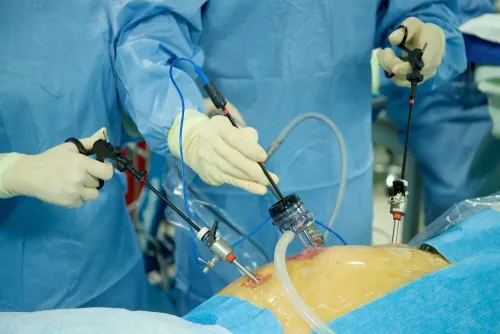
Routine bowel cleansing is not normally an appendix operation requirement. The operation uses laparoscopic ports or an open incision; bowel preparation is different from the fasting required for anaesthesia.
| Option | Practical difference | When it applies |
|---|---|---|
| Laparoscopic appendectomy | Three or more small incisions, usually less wound pain, fewer wound problems and a shorter stay | Preferred for suitable uncomplicated cases |
| Open appendectomy | One larger incision; recovery and wound care can take longer | Severe inflammation, perforation, adhesions, equipment limits or anaesthetic concerns |
| Antibiotics first | Avoids immediate surgery but requires follow-up because recurrence or later appendectomy remains possible | Selected stable adults without perforation, diffuse peritonitis or an appendicolith |
| Drainage or delayed surgery | Antibiotics treat infection; image-guided drainage controls a collection before possible interval surgery | Appendiceal abscess or phlegmon, depending on anatomy and stability |
Consent should state that laparoscopic surgery can be converted to an open operation if the appendix cannot be removed safely. Ask about bleeding, anaesthetic complications, bowel or urinary-tract injury, wound infection and infection inside the abdomen.
If perforation or an abscess is found, treatment can include a drain and a longer, case-specific antibiotic course. Uncomplicated cases usually receive antibiotics before the incision, without routine postoperative antibiotics. Ask whether pathology examination will confirm the appendix diagnosis and whether the planned approach could change during surgery.
Confirming the plan with a Thane surgical team
Confirm the hospital’s arrival instructions before leaving home: ask for the admission time, registration desk, ward location, emergency entrance, required referral papers, and the person who will approve surgery. For appendix treatment in Thane, also verify whether a bed and operating-team assessment are arranged or whether you must first attend the emergency department.
Use this appendix surgery admission checklist when you call:
- Ask which government photo ID, insurance card, pre-authorisation letter and payment deposit are required.
- Confirm which blood tests, ECG, chest assessment or pregnancy test are needed for your age, illnesses and anaesthesia plan.
- Ask whether scans must be brought on a CD, USB drive or film, and whether the radiology report is enough.
- Confirm the written fasting cut-off, permitted medicines with water, and the number of an adult who can accompany you and take you home.
- Report anticoagulants, diabetes medicines, steroids, weight-loss medicines, sleep apnoea, pregnancy possibility and previous anaesthetic problems; do not stop medicines without instructions.
| Situation | Hospital confirmation | Surgeon review useful when |
|---|---|---|
| Suspected uncomplicated appendicitis | Arrival route and same-day assessment | The diagnosis or scan is unclear |
| Possible perforation, abscess or severe illness | Emergency access, admission and antibiotic plan | You have fever, worsening pain or repeated vomiting |
| Previous abdominal surgery or major illness | Extra records and specialist clearance | Prior operations, pregnancy or heart, kidney or lung disease could alter surgery |
Dr Aditya Phadke’s review is useful when reports need interpretation, symptoms are changing, or you need to know whether travelling for a scheduled consultation is safe.
Related service
Appendix Appendix Best Appendix Surgeon in Thane Appendicitis is an inflammation of the appendix, a finger-shaped pouch that projects from your colon on the lower... |
Frequently asked questions
When should I go straight to emergency assessment for suspected appendicitis?
Go to the nearest emergency department for increasing right-lower-abdominal pain, repeated vomiting, fever, faintness, a rigid abdomen or inability to keep fluids down. Do not drive yourself if you feel faint, and tell staff when you last ate or drank.
What medical information is needed before appendix surgery?
Provide your medical history, allergies, current medicines, previous operations, ongoing conditions and relevant test reports. Tell the anaesthesia team about any prior anaesthetic reaction and disclose when you last ate or drank.
What should I do on the day I am admitted for appendix surgery?
Follow the hospital’s fasting instructions, bring identification and medication details, and avoid taking or stopping medicines unless the surgical or anaesthesia team directs you.
What does consent cover for laparoscopic or open appendix surgery?
The discussion covers the planned approach, why it is recommended, possible conversion from laparoscopic to open surgery, anaesthesia, expected recovery, complications and alternative treatment options.
How can I confirm my appendix surgery plan with a Thane surgical team?
Confirm the admission time, fasting instructions, medicines, required reports, planned surgical approach, emergency contact process and who to call if your symptoms worsen before admission.
Keywords