Considering Hernia Surgery in Thane? Learn about hernia symptoms, types, laparoscopic treatment, surgical evaluation, recovery, and important questions.
A visible bulge in the abdomen or groin is often one of the first signs that makes a person suspect a hernia. But the decision to undergo surgery involves more than identifying a lump. The type of hernia, symptoms, general health, and clinical findings all matter.
Step 1: Understand What a Hernia Is
A hernia occurs when internal tissue pushes through a weakened area of the surrounding muscle or tissue. It may appear around the groin, abdomen, or navel.
Common types include inguinal, umbilical, femoral, hiatal, and incisional hernias. Symptoms can vary depending on the location and severity.
A person may notice a bulge, discomfort, or pain, particularly during activities that increase pressure within the abdomen.
Step 2: Don't Assume Every Hernia Is the Same
The appropriate treatment depends on the individual case. A surgeon may assess the location of the hernia, its size, symptoms, reducibility, and overall health before recommending the next step.
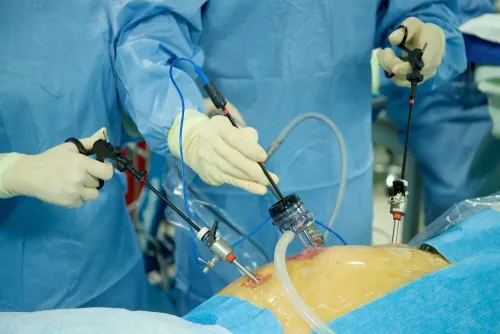
For suitable patients, Laparoscopic Hernia Surgery (Laparoscopic Hernia Surgery page) can provide a minimally invasive approach using smaller incisions, specialised instruments, and mesh repair where appropriate.
The doctor's portal specifically lists laparoscopic hernia repair as one of the available treatments.
Step 3: Ask the Right Questions
Before surgery, patients can discuss:
- What type of hernia is present?
- Is surgery necessary in the current situation?
- Which surgical technique is appropriate?
- What type of anaesthesia will be used?
- What restrictions should be expected after surgery?
These questions can help patients understand the procedure instead of making a decision based only on online information.
Step 4: Understand Why Delaying Evaluation May Not Help
A hernia generally does not simply disappear on its own. Symptoms may remain stable for some time, but a change in the bulge, increasing pain, or other concerning symptoms should prompt medical assessment.
Treatment should be individualised rather than based on the assumption that every hernia requires the same operation.
Step 5: Consider the Surgeon’s Experience
Hernia repair requires appropriate diagnosis, surgical planning, and postoperative care. Dr Aditya Shekhar Phadke is a laser, laparoscopic, and general surgeon with experience in surgical care.
Patients who want to understand the available options can also explore Hernia Surgery (Hernia Surgery page) for additional treatment information.
If you have noticed a persistent abdominal or groin bulge, recurring discomfort, or symptoms that are affecting daily activities, schedule a consultation (Contact Us page) for an individual assessment rather than relying on self-diagnosis.
Keywords