A suspected appendicitis admission involves more than an operation: clinicians first establish the diagnosis, assess complications and stabilise you before choosing treatment. You will be able to follow each stage, compare laparoscopic and open surgery, understand why recovery varies, and recognise problems that require urgent review.
Key takeaways
- Appendicitis diagnosis combines examination, blood tests and imaging.
- Laparoscopic appendectomy uses small incisions; open surgery uses one larger incision.
- Perforation or an abscess can require antibiotics, drainage or delayed surgery.
- Seek urgent care for worsening pain, fever, vomiting or a rigid abdomen.
How appendicitis is assessed in the emergency department
Doctors diagnose appendicitis by combining your symptoms, abdominal examination, laboratory tests and imaging; no single finding confirms every case. Pain often begins near the navel and moves to the right lower abdomen, with loss of appetite, nausea, vomiting or fever. The clinician checks for local tenderness, guarding, rebound pain and a rigid abdomen.
This assessment starts the appendix surgery process if urgent treatment is needed.
Blood and urine tests help find inflammation and exclude other causes:
- Complete blood count: a raised white-cell count supports infection or inflammation.
- C-reactive protein: a raised result supports inflammation and helps assess severity.
- Urine testing: blood or infection can point towards a urinary cause instead.
- Pregnancy test: required when pregnancy is possible because it changes imaging and treatment decisions.
Seek urgent assessment for worsening right-lower-quadrant pain, repeated vomiting, fever, inability to keep fluids down, fainting, confusion or a rigid, very painful abdomen. A sudden reduction in pain followed by severe illness is also an emergency because a ruptured appendix can briefly decompress before causing peritonitis.
| Imaging | What it shows | Common use |
|---|---|---|
| Ultrasound | Enlarged appendix, fluid or abscess without radiation | Children and pregnancy; first test when suitable |
| CT scan | Appendix inflammation, perforation, abscess and alternative diagnoses | Nonpregnant adults when the diagnosis remains uncertain |
| MRI | Inflammation without ionising radiation | Pregnancy when ultrasound is inconclusive |
What happens after admission and during the surgeon consultation
Triage confirms your identity, observations, pain level, allergies, last food and drink, current medicines, and pregnancy possibility. A cannula is placed for intravenous fluids, pain relief and antibiotics when infection is suspected. Fasting protects you if general anaesthesia becomes necessary; do not eat or drink until the team gives different instructions.
- The surgical team reviews your symptoms, examination, scans, blood results and the time course. It also checks for perforation, an abscess, sepsis or another cause of pain.
- The anaesthesia review covers previous anaesthetic problems, allergies, heart and lung conditions, medicines, smoking, loose teeth and the airway. Tell the anaesthetist about anticoagulants, diabetes medicines and the exact time you last ate.
- During the appendix surgeon consultation, the surgeon explains laparoscopic appendectomy, possible open surgery, expected benefits, bleeding, infection, bowel injury and the chance of finding perforation.
- Consent records the agreed operation and anaesthetic, but it does not guarantee that surgery will proceed. The team can change the plan if imaging or examination reveals an abscess, widespread contamination or a safer non-operative option.
- The decision may be appendectomy, antibiotics with observation, or image-guided drainage followed by reassessment. An appendicolith raises the chance that antibiotics alone will fail.
Ask Dr Aditya Phadke to state which finding determines the plan, how long fasting continues, and what happens if the laparoscopic approach is unsafe. That answer makes the appendix surgery process easier to follow before you enter the operating room.
Related service
Appendix Appendix Best Appendix Surgeon in Thane Appendicitis is an inflammation of the appendix, a finger-shaped pouch that projects from your colon on the lower... |
Appendix operation steps: laparoscopic and open appendectomy
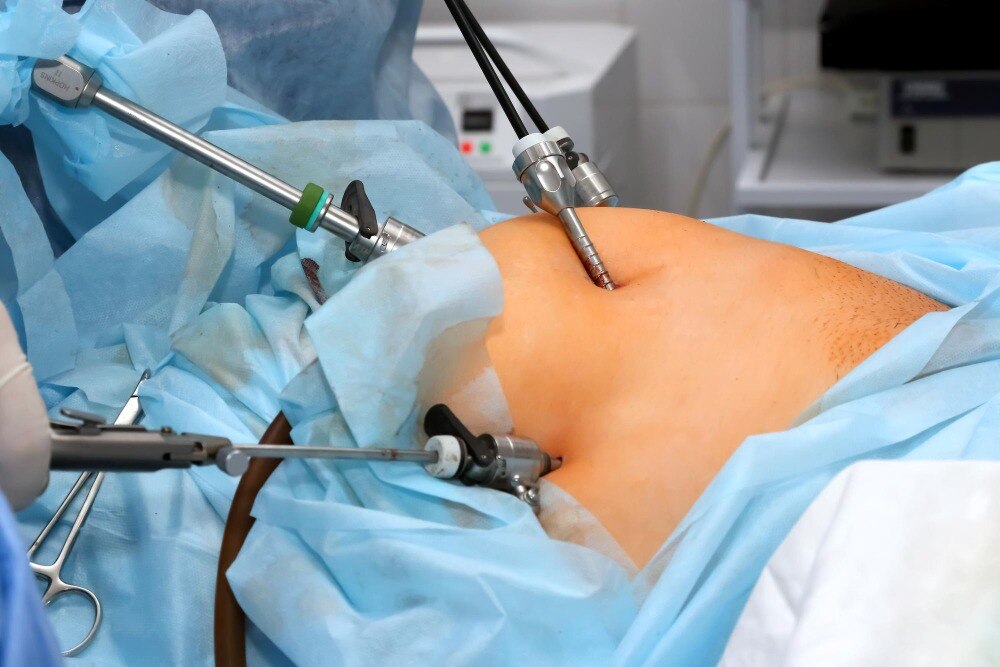
During laparoscopic appendectomy, the surgeon removes the appendix through several small abdominal ports rather than one large incision. Carbon dioxide gently inflates the abdomen so a camera and instruments have working space.
- The surgeon inserts the camera and examines the appendix and surrounding organs.
- The appendix’s blood supply and attachment to the bowel are sealed or divided with surgical instruments.
- The appendix is separated, placed in a retrieval bag and removed through a port.
- The surgeon checks for bleeding or contamination, washes the area when needed and closes the port wounds.
The exact port number and position can change with body anatomy, inflammation or previous abdominal surgery. Severe swelling, pus, perforation, dense adhesions, bleeding or difficulty identifying the appendix safely can make keyhole surgery unsuitable.
Open appendectomy uses one incision in the right lower abdomen. The surgeon may extend that incision or place it differently when the diagnosis or anatomy is uncertain. Converting from laparoscopic to open surgery is a safety decision, not automatically a complication; it prevents injury when safe progress through the ports is not possible.
The removed appendix goes to a pathology laboratory, where it is examined for inflammation and unexpected disease. Ask how the pathology result will be communicated and whether follow-up is needed. “Laser appendectomy” is not a standard separate category; clarify any clinic using that term, because appendectomy normally uses dissection, electrosurgery or energy-sealing instruments.
How perforation, abscess and other findings change treatment
Uncomplicated appendicitis usually leads to laparoscopic appendectomy during the same admission. Selected adults with no perforation, widespread infection or appendicolith can choose antibiotics alone, but recurrence or later appendectomy remains possible; an appendicolith raises treatment-failure and complication risk.
| Finding | Usual treatment | What changes |
|---|---|---|
| Uncomplicated appendix inflammation | Appendectomy or selected antibiotic treatment | Antibiotics require observation and follow-up because they do not guarantee a permanent cure |
| Perforation or gangrene | Urgent appendectomy, intravenous antibiotics and abdominal washout | A drain is placed selectively; hospitalisation, ileus, wound infection and intra-abdominal abscess become more likely |
| Generalised peritonitis | Urgent operation and source control | Delaying treatment risks sepsis; surgeons remove the appendix, clean contaminated fluid and continue antibiotics |
| Walled-off appendiceal abscess | Antibiotics with image-guided drainage when feasible | Surgery may be deferred until inflammation settles; interval appendectomy is considered selectively |
A contained abscess can make immediate surgery hazardous because inflamed bowel may be stuck together. If drainage is impossible, the patient deteriorates or infection persists, urgent surgery becomes necessary.
The appendix surgery process therefore depends on anatomy and infection, not a fixed script. The appendix operation steps may include laparoscopy, conversion to open surgery, washout, selective drain placement and a longer antibiotic plan.
Perforation, abscess, uncontrolled pain, inability to eat or significant illness usually require a longer admission than uncomplicated laparoscopic appendectomy, which may allow same-day or overnight discharge.
Discharge, appendix surgery recovery and follow-up
After an uncomplicated laparoscopic appendectomy, you can often go home the same day or after overnight observation. Discharge depends on stable vital signs, controlled pain, ability to drink and urinate, and safe walking—not simply the number of hours since surgery.
| Recovery course | Expected discharge pattern | What changes recovery |
|---|---|---|
| Uncomplicated appendicitis | Same day or next day | Small wounds, mild abdominal pain and fatigue |
| Perforated or gangrenous appendix | Longer hospital stay | Washout, intravenous antibiotics, possible drain, higher abscess and ileus risk |
| Abscess or significant medical illness | Individualised timing | Drainage, monitoring, or treatment of vomiting, infection or uncontrolled pain |
During appendix surgery recovery, walk regularly, increase food and fluids as tolerated, and keep dressings and incisions clean and dry according to your discharge instructions. Avoid heavy lifting until your surgical team clears it; ask when to drive, return to work, exercise and resume sexual activity.
Pathology results and wound review are commonly addressed at follow-up, so confirm the appointment before leaving.
Seek urgent clinical review for any of these warning signs:
- Fever that persists or returns
- Worsening abdominal pain, swelling or a rigid abdomen
- Repeated vomiting or inability to keep fluids down
- Pus, spreading redness or increasing tenderness around an incision
- Faintness, confusion or breathing difficulty
Use the follow-up visit, or an appendix surgeon consultation, to review pathology, antibiotics, a drain and your activity plan.
Frequently asked questions
How is appendicitis assessed in the emergency department?
Doctors combine your symptoms, abdominal examination, blood tests and imaging. They check for right lower abdominal tenderness, guarding, rebound pain and a rigid abdomen.
What happens during the appendix surgeon consultation?
The surgeon reviews your symptoms, examination findings, test results and imaging, then explains whether surgery is needed and which approach fits your condition.
What are the main appendix operation steps?
In a laparoscopic appendectomy, the surgeon uses small abdominal incisions, a camera and instruments to remove the appendix. Open appendectomy removes it through one larger incision.
How do perforation and abscess change appendicitis treatment?
A perforated appendix or abscess can require intravenous antibiotics, drainage of the abscess and a different timing or approach for surgery.
What does appendix surgery recovery involve?
Recovery includes monitoring after surgery, pain control, wound care, gradual return to food and activity, discharge instructions and follow-up for healing or complications.
Keywords