Choosing an operation starts with confirming the hernia, its urgency, and the factors that could change the safest repair. By the end, you will know what to bring to a hernia consultation, which examinations and scans matter, and how medical preparation affects the choice between open, laparoscopic, and robotic repair.
Key takeaways
- Confirm the hernia type, location, defect size, symptoms, and reducibility.
- Treat uncontrolled diabetes, smoking, infection, and blood-thinning issues before elective repair.
- Compare open, laparoscopic, and robotic repair for your hernia and medical history.
- Ensure consent covers mesh, recurrence, complications, recovery limits, and warning signs.
When is a hernia ready for surgery, and when is watchful waiting reasonable?
Surgery is ready for planning when the diagnosis records the hernia type, exact location, defect size, symptoms, and reducibility. These requirements for hernia surgery establish whether the next step is elective repair, further assessment, or emergency treatment.
| Type | Typical location | Why the pathway differs |
|---|---|---|
| Inguinal | Groin | Watchful waiting can suit selected men with minimal symptoms |
| Femoral | Upper inner thigh or groin | Higher emergency risk, especially in women |
| Umbilical | Navel | Decisions depend on defect size, symptoms, and enlargement |
| Epigastric | Upper abdominal wall | Repair depends on symptoms and defect characteristics |
| Incisional | Previous abdominal incision | Large defects may need CT-based reconstruction planning |
| Hiatal | Diaphragm opening | Treatment often follows reflux or obstruction assessment rather than a visible lump |
A reducible hernia returns into the abdomen with gentle pressure or when you lie down. An incarcerated hernia cannot be reduced; strangulation means its blood supply is threatened. Hernia treatment planning must therefore document whether the lump reduces and whether pain or bowel symptoms suggest urgency.
Watchful waiting is reasonable for a man with an asymptomatic or minimally symptomatic inguinal hernia who understands follow-up. Choose assessment for repair when pain, enlargement, activity limitation, or difficulty reducing the lump develops. Women with groin lumps need timely evaluation to distinguish an inguinal from a femoral hernia.
A painful irreducible lump, sudden worsening pain, vomiting, abdominal swelling, inability to pass stool or gas, fever, or skin discoloration requires emergency assessment, not routine preparation.
What should a hernia consultation and examination establish?
A useful hernia consultation must establish whether the lump is a defined, manageable problem or needs urgent assessment. The hernia operation requirements begin with a clear diagnosis, symptoms, reducibility, and a plan suited to your health and daily demands.
1. Describe the lump’s exact location, when it appeared, and whether standing, coughing, lifting, or exercise changes its size or pain. Tell the clinician whether it disappears or reduces when you lie down, and mention every previous hernia repair.
2. Discuss bowel or urinary symptoms, work involving lifting, exercise demands, smoking, weight, diabetes, heart or lung disease, bleeding risks, and every previous abdominal or pelvic operation. These details affect urgency, anaesthesia, repair choice, and recovery planning.
3. Expect inspection and palpation while standing and lying down. The clinician may ask you to cough or strain to reveal the defect, assess its size and contents, and determine whether the hernia is reducible.
4. An obvious groin or abdominal-wall hernia often needs no scan before surgery. Ultrasound helps when examination is uncertain or the lump is intermittent; it can show the defect, movement during straining, and hernia contents. If ultrasound is negative or nondiagnostic but suspicion remains, MRI can be considered.
5. A large ventral or incisional hernia often needs CT. It maps the defect, contents, multiple openings, abdominal-wall anatomy, and possible loss of domain, helping determine whether primary closure, component separation, staged treatment, or another reconstruction is feasible.
Which medical issues must be addressed before elective hernia repair?
Hernia surgery preparation is a risk review, not a fixed battery of tests. The surgical and anaesthesia teams should record every medicine and supplement, including warfarin, apixaban, rivaroxaban, aspirin, clopidogrel, diabetes medicines and blood-pressure drugs.
Never stop an anticoagulant yourself: the plan depends on the drug, kidney function, bleeding risk, clot risk and operation, and may require the prescribing clinician’s advice.
Before elective repair, address:
- Poorly controlled diabetes, obesity, malnutrition and active infection, which increase wound, mesh and recurrence risks.
- Smoking status; offer cessation support because stopping for about four weeks before surgery reduces complications.
- Any heart, lung, kidney or bleeding disorder, with targeted assessment where indicated.
- For complex abdominal-wall repair, a specific weight or glucose target, timeframe and reassessment date. Do not accept indefinite delay if symptoms are worsening or emergency surgery becomes more likely.
| Patient or operation | Testing approach | Why it matters |
|---|---|---|
| Healthy patient, minor repair | Broad blood panels, chest radiography and cardiac tests may be unnecessary | Avoids testing without a clinical question |
| Older patient or major repair | Select tests according to anaesthetic and operation size | Larger procedures create different physiological demands |
| Heart, lung, kidney or bleeding disease | Arrange targeted tests and medical review | Identifies risks that change anaesthesia or medication plans |
These hernia operation requirements must balance optimization against delay. A clear plan is safer than postponing surgery without a target or review date.
How should you compare open, laparoscopic, and robotic repair?
Choosing a technique by name alone can mislead you. Hernia treatment planning should match the hernia’s location, size, previous operations, anaesthetic suitability, surgeon’s experience and your priorities.
| Option | Incision and anaesthesia | Pain and recovery | Mesh, recurrence and conversion |
|---|---|---|---|
| Open repair | Incision over or near the hernia; local, regional or general anaesthesia may suit the operation | More wound discomfort is possible; recovery depends on repair size and work demands | Mesh is placed through the open field; conversion is not usually relevant |
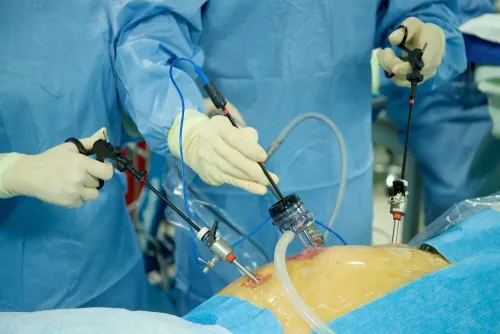
| Laparoscopic repair | Several small abdominal incisions; requires general anaesthesia | Often less groin pain and quicker recovery in suitable patients | Mesh is placed inside the abdominal wall; recurrence remains possible, and difficult cases can require conversion to open surgery |
| Robotic repair | Small abdominal incisions using instruments with computer-assisted control; requires general anaesthesia | Similar recovery goals to laparoscopy, without an automatic safety advantage | Mesh placement is planned for the defect; conversion to open surgery remains possible |
For most adult groin hernias, mesh is the first-choice repair because it lowers recurrence compared with non-mesh tissue repair. A Shouldice repair can suit selected patients when an experienced surgeon finds the anatomy and preferences appropriate; mesh versus no mesh is not a universal decision.
Laparoscopic or robotic repair deserves particular discussion for bilateral hernias or recurrence after open repair. Previous pelvic or abdominal surgery can change access, while a large incisional hernia may need CT planning for primary closure, component separation, staged treatment or another reconstruction.
A hernia consultation with Dr Aditya Phadke can match these variables to an open or minimally invasive plan.
Related services
Hernia Surgery Best Hernia Surgery In Thane A hernia is a protrusion of the abdomen through the weakest part of the muscle and tissue that contains it. View service → |
Laparoscopic Hernia Surgery Best Laparoscopic Surgeon in Thane A hernia occurs when an internal organ or other body part protrudes through the wall of muscle or tissue that... View service → |
What must consent and the postoperative plan cover?
Consent must identify the planned repair, mesh position, anaesthetic, expected recovery, and the risks specific to your hernia. Calling the operation “routine” is inadequate because an inguinal, umbilical, incisional, or large ventral repair has a different risk profile.
Ask whether consent covers:
- Recurrence, chronic pain, numbness, seroma, wound infection, and mesh infection
- Urinary retention, bowel injury, and blood-vessel injury
- Conversion from laparoscopic or robotic surgery to open surgery
- Reoperation if the repair fails, becomes infected, or causes persistent problems
| Repair approach | Consent and planning focus | Recovery questions |
|---|---|---|
| Open | Incision, wound problems, mesh position, and pain | Walking, driving, work, exercise, and lifting |
| Laparoscopic or robotic | General anaesthesia, access injury, conversion, and mesh position | Earlier activity, port wounds, and activity limits |
Your hernia surgery preparation is incomplete without a written postoperative plan. Ask how pain will be controlled, when you can walk, drive, work, exercise, and lift, and whether a support garment is useful. Walk early unless told otherwise; lifting limits should match the repair, wound, occupation, and surgical findings, not an automatic six-week rule.
Before leaving, obtain wound-care and medication instructions, the follow-up date, and a contact route for fever, increasing redness, drainage, uncontrolled pain, vomiting, a new irreducible lump, or inability to pass stool or gas.
Frequently asked questions
When is a hernia ready for surgery, and when is watchful waiting reasonable?
Plan surgery when the hernia causes pain, enlarges, limits activity, or becomes difficult to reduce. Watchful waiting can be reasonable for a small, reducible hernia with minimal symptoms after clinical assessment. Sudden severe pain, vomiting, a firm irreducible lump, or skin discoloration requires urgent medical care.
What should a hernia consultation and examination establish?
The consultation should document the hernia type, exact location, defect size, symptoms, reducibility, previous repairs, and effect on daily activities. The surgeon may request imaging when the diagnosis is uncertain or complications are suspected.
Which medical issues must be addressed before elective hernia repair?
Review diabetes control, smoking, obesity, heart and lung disease, current medicines, blood thinners, allergies, previous anaesthesia problems, and active infections. Arrange tests and medication changes according to your anaesthetist and surgeon’s instructions.
How should you compare open, laparoscopic, and robotic repair?
Compare the incision pattern, anaesthesia, mesh placement, recovery restrictions, recurrence risk, possible complications, surgeon experience, and whether your hernia has been repaired before. The best approach depends on hernia location, size, number, prior operations, and your health.
What must consent and the postoperative plan cover?
Consent should cover the proposed technique, mesh use, alternatives, expected benefits, recurrence, infection, bleeding, nerve pain, organ injury, anaesthetic risks, and possible conversion to another approach. The recovery plan should specify wound care, pain relief, lifting limits, activity progression, follow-up, and warning signs.
Keywords